
By Bridgette Kum’bweza Banda
Malawi’s persistent fuel shortages are raising fresh questions about the country’s ability to finance petroleum imports, maintain affordable pump prices and guarantee a reliable supply of one of its most essential commodities.
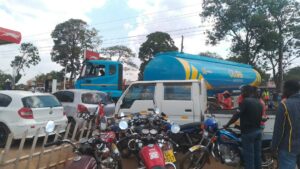
Motorists are struggling to access fuel at filling stations, while reports of black market sales at prices reaching K20,000 per litre have heightened concerns about the impact of the shortage on consumers and businesses.
The crisis has also renewed debate over whether Malawi needs more fuel importers, higher pump prices or a different approach to financing petroleum procurement.
Consumer Association of Malawi (CAMA) Executive Director John Kapito is calling for more companies to be licensed to import fuel, while Human Rights Consultative Committee (HRCC) Chairperson Robert Mkwezalamba is advocating for an upward adjustment of pump prices to reflect the cost of importing the commodity.
Meanwhile, the National Oil Company of Malawi (NOCMA) is seeking bids for approximately 440,000 metric tonnes of refined petroleum products in an effort to secure supplies through regional import routes.
The three developments highlight the different pressures facing Malawi’s petroleum sector, from access to foreign currency and the cost of imports to distribution and affordability.
Black market fuel raises consumer concerns
Kapito has expressed concern over the growing black market for fuel, saying it is worrying that motorists are spending nights at filling stations while others are being forced to buy the commodity at significantly higher prices.
He argues that the government should issue fuel import licences to more companies to increase supply and ease pressure on the existing distribution system.

Increasing the number of licensed importers could widen access to international suppliers and create additional procurement options. However, the effectiveness of such a measure would depend on whether the companies can secure foreign currency, obtain financing and bring fuel into the country consistently.
More import licences alone may not resolve the shortage if the underlying challenges affecting fuel procurement remain unaddressed.
The reported black market price of K20,000 per litre also raises questions about how available fuel is distributed and whether enforcement measures are sufficient to prevent illegal trading.
When motorists cannot obtain fuel through formal channels, they may turn to informal vendors, often at prices substantially above regulated rates.
This can increase transport costs, disrupt business operations and put further pressure on households already dealing with high living costs.
For authorities, addressing the crisis requires not only securing sufficient fuel imports but also ensuring that available supplies reach filling stations and consumers through legitimate distribution channels.
The debate over fuel prices
While CAMA is calling for more importers, Mkwezalamba has proposed an upward adjustment of fuel prices, arguing that prices should reflect the cost of bringing the commodity into Malawi.
He says the country is not making a profit from fuel imports because the cost of importing the commodity exceeds the prices at which it is sold locally.
His proposal raises a fundamental question about the sustainability of Malawi’s fuel pricing system: can the country maintain affordable pump prices when the cost of procuring and delivering fuel is higher than the revenue recovered through sales?

An International Monetary Fund (IMF) assessment published in 2025 found that petrol and diesel prices in Malawi were below cost recovery levels at the time, contributing to financial pressures and outstanding obligations within the petroleum sector.
Cost recovery involves setting prices at levels that cover the relevant costs of supplying fuel, including procurement and distribution, alongside applicable taxes and levies.
When pump prices remain below those costs, the resulting financial gap must be absorbed elsewhere in the system. Over time, this can contribute to arrears, weaken suppliers’ ability to finance further imports and complicate efforts to maintain a reliable supply.
However, the claim that Malawi makes no profit from fuel imports should be understood in this context. Evidence of prices falling below cost recovery levels does not establish that the entire petroleum sector generates no revenue.
An upward price adjustment could help close the gap between import costs and domestic selling prices. Yet it would also carry significant economic consequences.
Fuel is an important input in public transport, agriculture, manufacturing and the movement of goods. An increase in pump prices can therefore translate into higher transport fares, food prices and business operating costs.
The challenge for policymakers is to balance the financial sustainability of fuel procurement with the need to protect consumers from further increases in the cost of living.
NOCMA seeks 440,000 tonnes of fuel
As the debate over pricing and supply continues, NOCMA has invited sealed bids from eligible suppliers for approximately 440,000 metric tonnes of refined petroleum products.
The tender, referenced NOC01/ICB/G/FUEL/FY2027/2028, covers supplies to be sourced through the ports of Beira and Nacala in Mozambique and Dar es Salaam in Tanzania.
The procurement is intended to secure supplies of refined petroleum products, including petrol and diesel, through Malawi’s regional import corridors.
The tender also highlights the importance of financing arrangements in maintaining fuel supplies. Where suppliers offer credit terms, a state owned importer may gain additional time to settle payments, potentially easing immediate pressure on foreign exchange resources.
However, credit arrangements do not eliminate the cost of importing fuel. They defer payment obligations, making it important for the procurement process to be supported by sustainable financing and reliable repayment arrangements.
The 440,000 tonnes represent the volume NOCMA is seeking through the tender, not confirmation that the fuel has already been purchased or delivered. The actual impact will depend on the outcome of the bidding process, the availability of suppliers and the successful execution of contracts.
The procurement is nevertheless significant because it demonstrates the scale of the supply requirements and the importance of securing fuel through reliable regional routes.
Foreign exchange remains a major challenge
Malawi depends on imported petroleum products, leaving its fuel supply exposed to international prices, transport expenses, exchange rate movements and the availability of foreign currency.
Importers generally require foreign currency to pay international suppliers. When access to that currency is constrained, the ability to purchase and replenish fuel stocks can be affected even when products are available on the international market.
The cost of supplying fuel also extends beyond the purchase price. Shipping, insurance, financing and transportation through neighbouring countries all contribute to the final cost of delivering the commodity to Malawi.
These pressures help explain why the fuel crisis cannot be resolved through a single intervention.
Licensing more importers could broaden the supply base, but those companies would still need financing and access to foreign currency. Adjusting pump prices could improve cost recovery, but higher prices would not automatically guarantee that fuel is available. Large procurement contracts could secure future supplies, but their success would depend on suppliers delivering the products and the importer meeting its contractual obligations.
A sustainable solution therefore requires coordinated action across procurement, financing, pricing and distribution.
Finding a balance between supply and affordability
The positions taken by CAMA, HRCC and NOCMA reflect different aspects of Malawi’s fuel challenge.
CAMA wants the government to widen participation in fuel importation and increase supply. HRCC is calling for pump prices that better reflect import costs. NOCMA is pursuing a major procurement exercise to secure refined petroleum products.
Although their approaches differ, the underlying objective is the same: ensuring that fuel is consistently available to consumers and businesses.
For the government, the challenge is to establish a system that supports reliable imports without placing an unsustainable burden on households.
This would require transparent procurement arrangements, predictable fuel pricing policies, improved access to financing and foreign currency, and effective oversight of the distribution network.
Authorities would also need to ensure that any price adjustments are accompanied by improvements in supply reliability and measures to prevent illegal diversion and excessive black-market pricing.
For consumers, the immediate priority is access to fuel at regulated prices without spending nights in queues or resorting to costly informal markets.
For businesses, reliable fuel supplies are essential to planning, transportation and controlling operating costs.
Ultimately, Malawi’s fuel crisis is not simply about the price at the pump. It is about whether the country can sustainably finance its imports, secure sufficient supplies and distribute the commodity efficiently.
The test for the measures now being proposed will be whether they translate into shorter queues, reliable deliveries and fairer access to fuel or whether consumers will continue to bear the cost of a supply system under pressure.